What Is an Experimental Food Private Chef Experience?

By:
Sean Kommer
Published on:
September 15, 2026
Published on:
8
min read

Quick Answer

Most private dinners begin with a question about what you like to eat. Experimental dining begins with a question about what you have never eaten. That one shift changes everything that follows, from how the chef shops to how the plates land on your table.

The format has moved out of tasting menu dining rooms and into private homes over the past few years. Hosts who already know their way around a wine list want an evening they cannot book a reservation for, and chefs want a room where they can test an idea in front of eight people instead of eighty.

This guide covers what an experimental food experience actually involves, how a chef designs one for your kitchen, what the night looks like from a guest's seat, and what you need to have ready before the chef arrives.

Hire a private chef with Gradito. Whether you're planning an intimate dinner, a celebration, or a corporate event, Gradito connects you with vetted private chefs in New York City.

What Makes a Meal an Experimental Food Experience?

What separates an experimental food experience from a standard private dinner is the chef's freedom to invent rather than execute. There is no house menu to pick from and no dish the chef has cooked five hundred times. The starting point is usually a single idea, an ingredient at its peak, a technique the chef has been refining, or a story the host wants the meal to tell.

Technique does a lot of the work here. Chefs working in this space lean on fermentation, curing, low-temperature cooking, controlled smoke, pressure infusion, and texture transformation to make familiar ingredients behave in unfamiliar ways. Molecular gastronomy sits inside that toolkit, but it is one option among many rather than the whole point. A tomato aged three weeks can be more surprising than a foam.

The other defining trait is structure. An experimental menu is sequenced like a narrative, with early courses setting an expectation and later courses breaking it. Portions are small so the arc can run long. Nothing on the table is filler, and every course is meant to be discussed.

How Does an Experimental Food Private Chef Build a Menu?

An experimental food private chef builds a menu backward from your constraints, not forward from a recipe file. The first conversation covers allergies, hard dislikes, guest count, how adventurous the room actually is, and what your kitchen can physically support. Only after that does the chef start sketching courses.

Season and sourcing drive the rest. Because the menu is written for one night, the chef can buy what looks best that week rather than what a printed menu demands. Many chefs will hold two or three courses open until a few days before service, which is why lead times run longer than they do for a classic private dinner.

ElementClassic private chef dinnerExperimental food dinner
Menu sourceChef's set repertoire, chosen by the hostOriginal courses written for one night only
Typical course count3 to 5 courses6 to 12 small courses
Typical booking lead time1 to 2 weeks3 to 6 weeks
Typical time at the tableAbout 2 hours3 to 4 hours
Best guest count2 to 204 to 12
Kitchen demandsStandard range, oven, and fridgeExtra fridge and freezer space, counter space, reliable power
Guest roleEat and enjoyTaste, ask questions, react

Prep is the part guests never see. Ferments, cures, stocks, and infusions often start a week or more before the dinner, which means much of the menu is finished before the chef ever reaches your door.

What Happens During the Dinner Itself?

An experimental food dinner runs slower and more conversationally than a normal dinner party, usually three to four hours from first bite to last. Courses arrive in small portions, often one or two bites, and the chef typically introduces each one with a short explanation of what it is and why it exists.

That narration is a real part of the experience. Guests learn that the broth was built from vegetable scraps saved over three days, or that the sorbet is made from the same herb that shows up again two courses later. The information changes how the food tastes, which is the point.

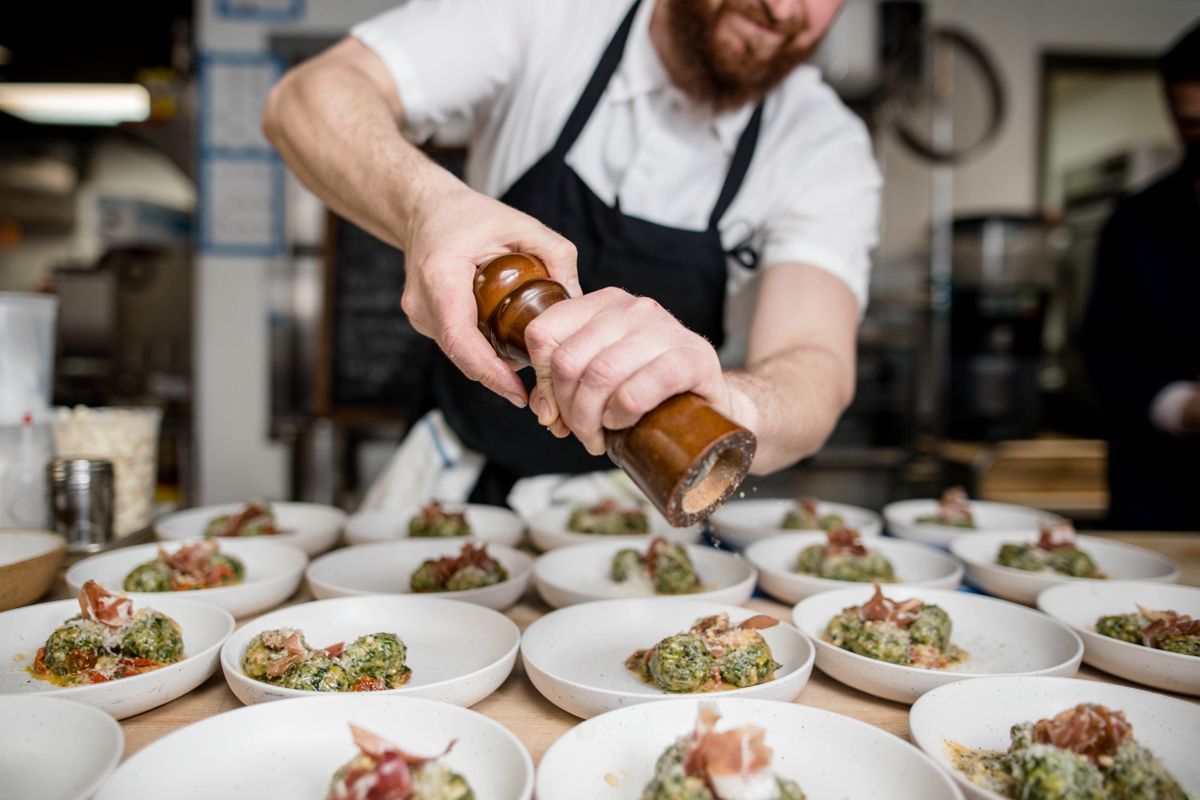
Expect the kitchen to become part of the room. Many chefs plate at the counter so guests can watch, and some build a course that finishes at the table. Pacing is deliberate, with gaps between courses used for conversation rather than treated as delays.

Who Books an Experimental Food Private Chef Experience?

The people who book an experimental food experience are usually hosts who have already done the traditional version well and want a night nobody can predict. Milestone birthdays, anniversaries, and engagement dinners lead the list, followed by small corporate gatherings where a shared surprise does more for a room than a steak plate ever will.

Home supper clubs are the fastest-growing group. A rotating host, eight seats, and a chef given creative control produce an evening that feels closer to a private residency than a catered meal. Many of these hosts book the same chef repeatedly so the menus can build on each other.

It also works as a gift. If you are shopping for someone who has every kitchen tool made, an evening they cannot buy for themselves lands harder than an object. Before you book, it is worth reading through the questions to ask before booking a private dinner chef so the brief you give is specific enough for the chef to work from.

Adventurous eaters are the obvious fit, but the format flexes further than people expect. Chefs regularly write experimental menus around plant-based, gluten-free, and low-sodium requirements, and the constraint often produces the most inventive courses of the night. There are also plenty of ways a private chef can personalize your dining experience that stop short of a full experimental menu if your table is split.

How Do You Prepare Your Home for the Chef?

Preparing your home for experimental dining comes down to space, power, and honesty about your kitchen. Clear the counters completely and empty at least one full fridge shelf and a freezer drawer, since chilled components and frozen elements travel in ready to finish.

Tell the chef what you actually have. Oven type, burner count, whether the outlets on one wall share a circuit, and how much prep surface exists all shape what can be served. A chef who knows about a temperamental oven will design around it. A chef who finds out at six o'clock cannot.

Handle the guest brief too. Collect allergies and firm dislikes in advance and send them in one message rather than in pieces, and let guests know the meal runs long so nobody plans a nine o'clock exit. Seating should be one table if possible, because the format depends on everyone tasting the same course at the same moment.

Ready to book a private chef? Gradito makes it simple to find and hire a professional private chef for any occasion in New York City. From intimate dinners to large events, every experience is personalized to you.

Sean Kommer of Gradito posing for a picture
Sean Kommer

Sean Kommer is the founder of Gradito, New York's premier private chef marketplace, and brings over 15 years of firsthand experience working in some of the world's most acclaimed Michelin-starred kitchens. His culinary career has taken him inside three-hat Tetsuya's in Sydney, two-star Disfrutar in Barcelona, and one-star Shiosaka in Tokyo, giving him a rare, ground-level perspective on fine dining across multiple continents. An avid traveler and student of food culture, Sean immersed himself in Italy's hospitality traditions before channeling that passion into Gradito, a platform that connects discerning clients with trusted private chefs across the U.S. His writing draws on decades of real-world kitchen expertise, cross-cultural culinary study, and entrepreneurial experience building a vetted chef network from the ground up.

Founder of Gradito

From a recent Gradito dinner

This menu was served at a private dinner in New York last month.

Reserve your own evening — same chef, your menu, your home.

FAQs

What is an experimental food private chef experience?

It is a private dinner where the chef writes an original tasting menu for your home instead of cooking from a set list. Courses are small, technique-driven, and served only once.

How much notice does this kind of dinner need?

Most chefs ask for three to six weeks. Fermentation, curing, and ingredient sourcing all happen well before service, so short notice limits what the chef can put on the menu.

Is experimental food the same as molecular gastronomy?

No. Molecular gastronomy is one set of techniques a chef might use. An experimental food menu can be built entirely on fermentation, fire, or seasonal sourcing with no lab equipment involved.

Can an experimental menu work with dietary restrictions?

Yes. Chefs build these menus around allergies, plant-based diets, gluten-free needs, and other restrictions regularly, and the limits often push the menu somewhere more interesting.

How many guests should an experimental dinner have?

Four to twelve works best. Small counts keep the pacing tight, let the chef explain each course, and keep the table in one conversation instead of several.

Most private dinners begin with a question about what you like to eat. Experimental dining begins with a question about what you have never eaten. That one shift changes everything that follows, from how the chef shops to how the plates land on your table.

The format has moved out of tasting menu dining rooms and into private homes over the past few years. Hosts who already know their way around a wine list want an evening they cannot book a reservation for, and chefs want a room where they can test an idea in front of eight people instead of eighty.

This guide covers what an experimental food experience actually involves, how a chef designs one for your kitchen, what the night looks like from a guest's seat, and what you need to have ready before the chef arrives.

Hire a private chef with Gradito. Whether you're planning an intimate dinner, a celebration, or a corporate event, Gradito connects you with vetted private chefs in New York City.

What Makes a Meal an Experimental Food Experience?

What separates an experimental food experience from a standard private dinner is the chef's freedom to invent rather than execute. There is no house menu to pick from and no dish the chef has cooked five hundred times. The starting point is usually a single idea, an ingredient at its peak, a technique the chef has been refining, or a story the host wants the meal to tell.

Technique does a lot of the work here. Chefs working in this space lean on fermentation, curing, low-temperature cooking, controlled smoke, pressure infusion, and texture transformation to make familiar ingredients behave in unfamiliar ways. Molecular gastronomy sits inside that toolkit, but it is one option among many rather than the whole point. A tomato aged three weeks can be more surprising than a foam.

The other defining trait is structure. An experimental menu is sequenced like a narrative, with early courses setting an expectation and later courses breaking it. Portions are small so the arc can run long. Nothing on the table is filler, and every course is meant to be discussed.

How Does an Experimental Food Private Chef Build a Menu?

An experimental food private chef builds a menu backward from your constraints, not forward from a recipe file. The first conversation covers allergies, hard dislikes, guest count, how adventurous the room actually is, and what your kitchen can physically support. Only after that does the chef start sketching courses.

Season and sourcing drive the rest. Because the menu is written for one night, the chef can buy what looks best that week rather than what a printed menu demands. Many chefs will hold two or three courses open until a few days before service, which is why lead times run longer than they do for a classic private dinner.

ElementClassic private chef dinnerExperimental food dinner
Menu sourceChef's set repertoire, chosen by the hostOriginal courses written for one night only
Typical course count3 to 5 courses6 to 12 small courses
Typical booking lead time1 to 2 weeks3 to 6 weeks
Typical time at the tableAbout 2 hours3 to 4 hours
Best guest count2 to 204 to 12
Kitchen demandsStandard range, oven, and fridgeExtra fridge and freezer space, counter space, reliable power
Guest roleEat and enjoyTaste, ask questions, react

Prep is the part guests never see. Ferments, cures, stocks, and infusions often start a week or more before the dinner, which means much of the menu is finished before the chef ever reaches your door.

What Happens During the Dinner Itself?

An experimental food dinner runs slower and more conversationally than a normal dinner party, usually three to four hours from first bite to last. Courses arrive in small portions, often one or two bites, and the chef typically introduces each one with a short explanation of what it is and why it exists.

That narration is a real part of the experience. Guests learn that the broth was built from vegetable scraps saved over three days, or that the sorbet is made from the same herb that shows up again two courses later. The information changes how the food tastes, which is the point.

Expect the kitchen to become part of the room. Many chefs plate at the counter so guests can watch, and some build a course that finishes at the table. Pacing is deliberate, with gaps between courses used for conversation rather than treated as delays.

Who Books an Experimental Food Private Chef Experience?

The people who book an experimental food experience are usually hosts who have already done the traditional version well and want a night nobody can predict. Milestone birthdays, anniversaries, and engagement dinners lead the list, followed by small corporate gatherings where a shared surprise does more for a room than a steak plate ever will.

Home supper clubs are the fastest-growing group. A rotating host, eight seats, and a chef given creative control produce an evening that feels closer to a private residency than a catered meal. Many of these hosts book the same chef repeatedly so the menus can build on each other.

It also works as a gift. If you are shopping for someone who has every kitchen tool made, an evening they cannot buy for themselves lands harder than an object. Before you book, it is worth reading through the questions to ask before booking a private dinner chef so the brief you give is specific enough for the chef to work from.

Adventurous eaters are the obvious fit, but the format flexes further than people expect. Chefs regularly write experimental menus around plant-based, gluten-free, and low-sodium requirements, and the constraint often produces the most inventive courses of the night. There are also plenty of ways a private chef can personalize your dining experience that stop short of a full experimental menu if your table is split.

How Do You Prepare Your Home for the Chef?

Preparing your home for experimental dining comes down to space, power, and honesty about your kitchen. Clear the counters completely and empty at least one full fridge shelf and a freezer drawer, since chilled components and frozen elements travel in ready to finish.

Tell the chef what you actually have. Oven type, burner count, whether the outlets on one wall share a circuit, and how much prep surface exists all shape what can be served. A chef who knows about a temperamental oven will design around it. A chef who finds out at six o'clock cannot.

Handle the guest brief too. Collect allergies and firm dislikes in advance and send them in one message rather than in pieces, and let guests know the meal runs long so nobody plans a nine o'clock exit. Seating should be one table if possible, because the format depends on everyone tasting the same course at the same moment.

Ready to book a private chef? Gradito makes it simple to find and hire a professional private chef for any occasion in New York City. From intimate dinners to large events, every experience is personalized to you.

Sean Kommer of Gradito posing for a picture
Sean Kommer

Sean Kommer is the founder of Gradito, New York's premier private chef marketplace, and brings over 15 years of firsthand experience working in some of the world's most acclaimed Michelin-starred kitchens. His culinary career has taken him inside three-hat Tetsuya's in Sydney, two-star Disfrutar in Barcelona, and one-star Shiosaka in Tokyo, giving him a rare, ground-level perspective on fine dining across multiple continents. An avid traveler and student of food culture, Sean immersed himself in Italy's hospitality traditions before channeling that passion into Gradito, a platform that connects discerning clients with trusted private chefs across the U.S. His writing draws on decades of real-world kitchen expertise, cross-cultural culinary study, and entrepreneurial experience building a vetted chef network from the ground up.

Founder of Gradito
Stay up to date with all of the latest happenings and things to do in the world of food and drinks.
Thank you! Your submission has been received!
Oops! Something went wrong while submitting the form.
Blog

The Latest & Greatest

A private chef creating a bunch of plates and putting salt onto the food

What Is an Experimental Food Private Chef Experience?

Learn what an experimental food private chef experience includes, how chefs plan the menu, and what to expect at home.
A private chef making a plate of food

How to Compare Private Chef Packages Before You Book

Learn how to compare private chef packages by price, menu options, and service level so you book the right fit for your next event.
White close icon